
Polaroid Snap cameras offer instant gratification, mirroring the classic appeal of vintage Polaroid models. Understanding the polaroid snap manual is crucial for optimal use and enjoying its unique features.
What is a Polaroid Snap Camera?
Polaroid Snap cameras represent a modern take on instant photography, differing from traditional Polaroid models. They utilize ZINK (Zero Ink) technology, eliminating the need for messy inks or developing fluids. The polaroid snap manual details this process, explaining how the camera uses heat to activate dyes within the special paper. These compact, digital cameras instantly print full-color stickers and photos. The manual guides users through features like auto flash, self-timer, and various creative modes, ensuring a user-friendly experience. Understanding the manual unlocks the camera’s full potential.
Brief History of Polaroid Instant Cameras
Polaroid revolutionized photography in 1948 with the Model 95, the first instant camera. This innovation, detailed in historical polaroid snap manual archives, offered immediate image development. While the Snap utilizes ZINK technology, it builds upon this legacy. Later models like the SX-70 and 600 gained popularity. Though Polaroid faced challenges, the brand persevered, introducing digital instant cameras like the Snap. The polaroid snap manual reflects this evolution, bridging classic instant appeal with modern digital convenience, offering a simplified user experience.
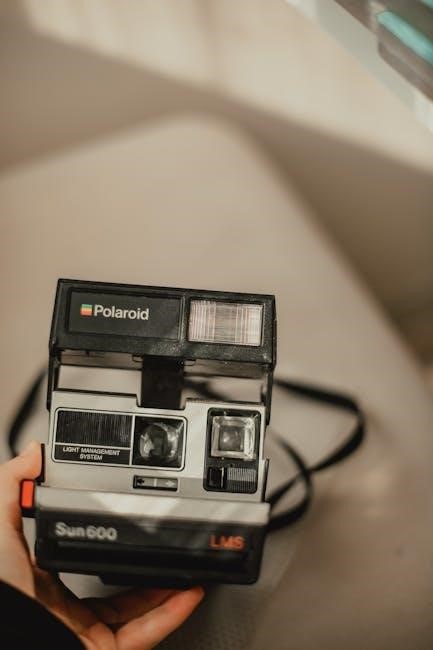
Understanding the Polaroid Snap Manual
The polaroid snap manual is your guide to unlocking the camera’s full potential, covering everything from basic operations to creative features and troubleshooting tips.
Where to Find the Manual
Locating your Polaroid Snap camera manual is straightforward. The official Polaroid website (https://www.polaroid.com/) hosts digital versions of most manuals, searchable by model number. Alternatively, many retailers that sell Polaroid cameras also provide links to downloadable manuals on their product pages; If you purchased a used camera without a physical copy, online archives and enthusiast forums often have scanned versions available for download. Checking these resources ensures you have the latest information for your specific Polaroid Snap model.
Manual Contents Overview
The Polaroid Snap manual comprehensively covers camera operation. Expect sections detailing component identification, battery installation, and film loading procedures – crucial for i-Type, 600, and SX-70 compatibility. It explains shooting modes, flash usage, and creative features like the self-timer. Troubleshooting guides address common issues like blurry photos or film ejection problems. Furthermore, the manual details maintenance, care instructions, and potentially, Bluetooth connectivity if applicable to your model, ensuring optimal performance.

Camera Components & Features
Polaroid Snap cameras boast external parts, buttons, dials, and a display screen. The polaroid snap manual details each component’s function for effortless operation and creative control.
External Parts Identification
The Polaroid Snap manual meticulously outlines each external component. Key areas include the lens, viewfinder (if applicable), shutter button, film ejection slot, and battery compartment. Familiarize yourself with the film door release and the strap attachment points. The manual provides labeled diagrams illustrating the camera’s physical layout. Understanding these parts is fundamental for proper handling and maintenance. Identifying the flash activation button and the various ports (USB, etc.) is also crucial for utilizing all features. Refer to the manual’s illustrations for precise locations and descriptions of each external element.
Button and Dial Functions
The Polaroid Snap manual details each button and dial’s specific function. The shutter button initiates image capture, while the power button controls operation. Dials often adjust settings like flash mode (auto, on, off) and self-timer duration. The manual clarifies the purpose of any mode selection buttons, enabling creative control. Understanding the film ejection button’s role is vital. It also explains any dedicated buttons for filters or special effects. Refer to the manual’s diagrams for visual guidance on button placement and corresponding actions.
Display Screen Information
The Polaroid Snap manual explains all icons displayed on the camera’s screen. Battery level indicators show remaining power, while film counter displays shots remaining. Flash status (auto, on, off) is clearly indicated. Some models show exposure settings or selected shooting modes. The manual deciphers any error messages, aiding troubleshooting. Understanding these visual cues, as detailed in the polaroid snap manual, ensures optimal camera operation and prevents unexpected results. Refer to the manual’s illustrations for precise icon definitions.
Loading and Preparing the Camera
The polaroid snap manual details proper battery insertion and film loading procedures. Correct film type (i-Type, 600, SX-70) selection, as per the manual, is vital.
Inserting Batteries
The polaroid snap manual clearly illustrates battery compartment location and proper battery orientation. Typically, Polaroid Snap cameras utilize AA batteries; the manual specifies the quantity needed – often three. Ensure correct polarity (+/-) when inserting, referencing the diagram within the manual. Incorrect insertion prevents operation and may damage the camera. Always use fresh batteries for optimal performance. The manual also advises removing batteries during prolonged storage to prevent leakage and corrosion, extending the camera’s lifespan. Refer to the manual’s troubleshooting section if the camera fails to power on after battery installation.
Loading Polaroid Film (i-Type/600/SX-70)
The polaroid snap manual details film loading procedures specific to compatible film types: i-Type, 600, and SX-70. It emphasizes matching film to camera compatibility. The manual illustrates how to open the film compartment and correctly insert the film pack, darkroom side down. Ensure a snug fit. The camera automatically ejects the dark slide after initial photos. The manual cautions against opening the film compartment in bright light to prevent film exposure. Refer to the manual for specific instructions based on your film type.
Understanding Film Types & Compatibility
The polaroid snap manual clarifies distinctions between i-Type, 600, and SX-70 film. i-Type film requires newer Polaroid cameras (Now, OneStep2) as it lacks a battery. 600 film contains a battery, compatible with vintage and newer models. SX-70 film also has a battery, suited for SX-70 cameras. The manual stresses using compatible film; incorrect types may damage the camera or produce poor results. It details ISO sensitivity differences (ISO 640 for i-Type/600, ISO 160 for SX-70) impacting image brightness.

Taking Photos with Your Polaroid Snap
The polaroid snap manual details basic shooting modes, flash usage, and exposure adjustments for optimal image capture. Experiment to achieve desired results!
Basic Shooting Modes
The polaroid snap manual outlines several straightforward shooting modes for diverse photographic scenarios. Typically, these include a standard mode for everyday shots, optimized for balanced exposure and color. A black and white mode delivers classic monochrome images, enhancing artistic expression. Additionally, a self-portrait mode is often available, facilitating self-capture. The manual will detail how to cycle through these modes using the camera’s controls, ensuring users can quickly adapt to different lighting conditions and creative preferences. Understanding these basics unlocks the full potential of instant photography.
Using the Flash
The polaroid snap manual details flash functionality, essential for low-light conditions. Typically, a dedicated button activates the flash, offering options for auto, on, or off settings. Auto mode intelligently determines when flash is needed, while manual control provides creative flexibility. The manual emphasizes that flash can impact image color and exposure, potentially causing washed-out effects in bright environments. Experimentation is encouraged to master flash usage, achieving well-lit and balanced instant photos. Proper flash application enhances image clarity and vibrancy.
Adjusting Exposure Settings
The polaroid snap manual explains how to fine-tune exposure for optimal image results. While some models offer automatic exposure, understanding manual adjustments is key. Brightness control, often indicated by plus and minus symbols, allows for lightening or darkening photos. The manual cautions against overexposure, which can lead to washed-out images, and underexposure, resulting in dark photos. Experimenting with these settings, alongside considering lighting conditions, ensures well-balanced and visually appealing instant photographs.
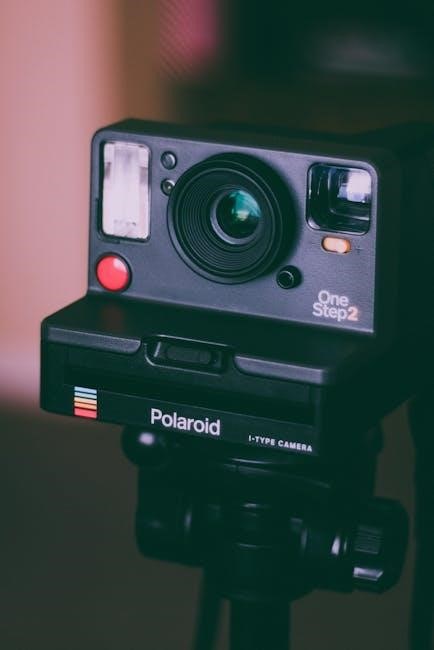
Exploring Creative Features
The polaroid snap manual details fun options like self-timers, filters, and double exposure modes. These features enhance creativity and allow for unique, personalized instant photos.
Self-Timer Function
The Polaroid Snap manual explains how to utilize the self-timer for group photos or self-portraits. Typically, activating the self-timer involves pressing a dedicated button, often indicated by a clock icon. The manual will specify the timer duration – usually around 10 seconds – providing ample time to join the frame.
It’s crucial to position the camera securely, as any movement during the countdown will result in a blurry image. The manual also clarifies how to cancel the self-timer if needed, preventing accidental photo capture. Mastering this feature expands photographic possibilities.
Using Filters & Accessories
The Polaroid Snap manual details compatible filters and accessories to enhance creativity. Some models support lens filters for unique effects, while others offer colorful frames or stickers. The manual illustrates proper attachment methods, ensuring secure fitting and preventing damage.
It also outlines how filters impact image quality and suggests optimal settings for various effects. Exploring accessories like wrist straps or carrying cases, mentioned in the manual, improves usability and protection. Understanding these additions unlocks personalized photographic expression.
Double Exposure Mode
The Polaroid Snap manual explains the double exposure feature, allowing two images to merge onto one film frame. It details how to activate the mode and the camera’s process for capturing successive shots without ejecting the film.
The manual advises careful composition for desired results, as overlapping subjects create unique artistic effects. It also notes potential limitations, like brightness adjustments, and suggests experimenting to master this creative technique. Understanding these guidelines maximizes the impact of double exposures.
Film & Image Considerations
The Polaroid Snap manual stresses proper film storage and temperature control for optimal results. It details how these factors impact image quality and color accuracy.
Film Temperature & Storage
The Polaroid Snap manual emphasizes that film performance is heavily influenced by temperature. Avoid extreme heat or cold, as this can drastically affect image development. Ideally, store film packs in a cool, dry place, between 55-80°F (13-27°C).
Exposure to high temperatures can lead to overexposure and faded images, while cold temperatures may result in underexposure; The manual advises allowing film to acclimate to room temperature before use for consistent results. Proper storage extends film life and ensures vibrant, accurate photos.
Understanding Image Quality & Color
The Polaroid Snap manual notes that image quality is influenced by lighting and film type. Expect a softer, more vintage aesthetic with Polaroid film, characterized by gentle color saturation and contrast. The manual details that i-Type film offers a more modern, vibrant look compared to 600 film’s classic tones.
Color accuracy can vary; slight shifts are normal. The manual suggests experimenting with different lighting conditions to achieve desired results, acknowledging that overexposure can wash out details.
Troubleshooting Common Image Issues (e.g., Red Tint)
The Polaroid Snap manual addresses common issues like a red tint, often caused by low temperatures. The manual recommends warming the film pack before use. Uneven development or faded images can stem from improper film storage – keep it cool and dry.
Blurry photos may indicate camera shake; stabilize the camera during shooting. The manual also suggests checking battery levels, as low power can affect image quality and development.
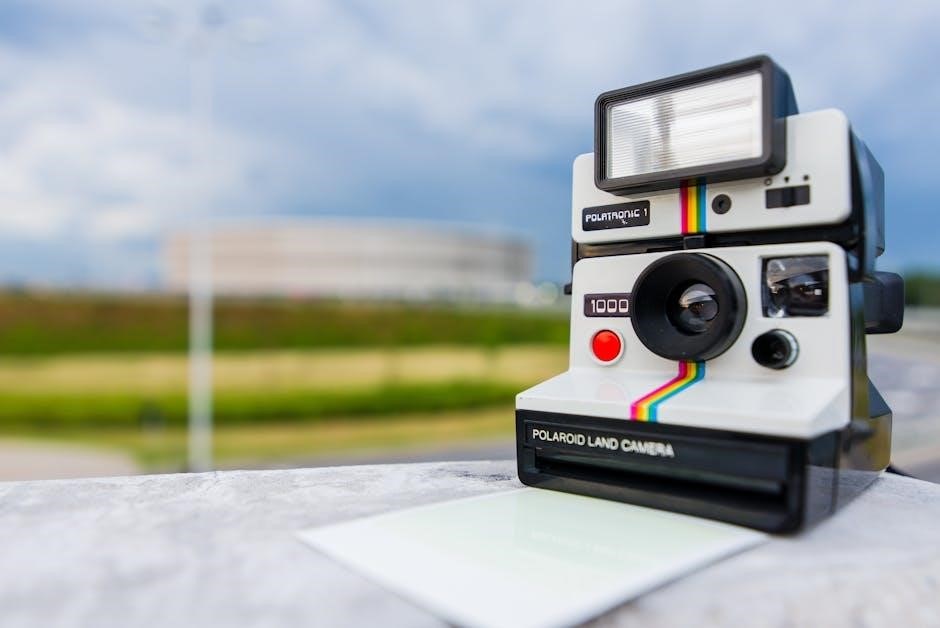
Maintenance & Care
The Polaroid Snap manual details cleaning procedures and film ejection troubleshooting. Proper care, as outlined, ensures longevity and optimal performance of your instant camera.
Cleaning the Camera
The Polaroid Snap manual emphasizes gentle cleaning practices. Use a soft, dry cloth to wipe the camera body, avoiding harsh chemicals or abrasive cleaners. For stubborn marks, slightly dampen the cloth with water, ensuring no liquid enters the camera’s internal components. Pay attention to the film door and viewfinder, carefully removing any dust or debris. Avoid excessive moisture, as it can damage the electronic parts. Regularly cleaning ensures optimal performance and preserves the camera’s aesthetic appeal, extending its lifespan as detailed within the user guide.
Film Ejection Troubleshooting
The Polaroid Snap manual addresses film ejection issues. If a photo doesn’t eject, first ensure correct film loading and sufficient battery power. Avoid forcing the film; gently try again. Temperature affects development – cold temperatures can hinder ejection. Check for error messages on the display. If problems persist, consult the manual’s troubleshooting section for specific error codes. Improper film storage or expired film can also cause ejection failures, as detailed within the guide.
Battery Life & Replacement
The Polaroid Snap manual details battery information. Battery life varies with flash usage and photo frequency. Expect approximately X number of prints per set of batteries (refer to manual for specifics). The manual instructs on proper battery insertion and removal. Use only recommended battery types to avoid damage. Low battery indicators signal replacement needs. Dispose of used batteries responsibly, following local regulations, as outlined in the polaroid snap manual’s safety guidelines.

Advanced Features (If Applicable)
The Polaroid Snap manual may detail Bluetooth connectivity for app integration and remote control, enhancing photo capture and editing capabilities.
Bluetooth Connectivity (Polaroid I-2 & Newer Models)
The Polaroid Snap manual, specifically for I-2 and newer models, will explain Bluetooth pairing with your smartphone. This allows remote camera control via the Polaroid app, offering features like timed shots and exposure adjustments. The app also enables creative editing tools, filter application, and direct sharing to social media platforms. Manual instructions detail troubleshooting connection issues and maximizing the app’s functionality for a seamless, modern instant photography experience. Explore remote triggering and customized settings for enhanced creative control.
App Integration & Remote Control
Your Polaroid Snap manual details how the companion app unlocks remote camera control. Through Bluetooth, you can trigger the shutter from your smartphone, perfect for group photos or self-portraits. The app provides access to advanced settings like exposure compensation and flash control, not readily available on the camera itself. Manual sections guide you through downloading, pairing, and utilizing the app’s full potential, including image editing and sharing options, enhancing your instant photography workflow.
Troubleshooting Common Problems
The polaroid snap manual offers solutions for issues like camera failures, film ejection problems, and blurry photos, ensuring a smooth instant photography experience.
Camera Not Turning On
If your Polaroid Snap camera fails to power on, consult the manual for troubleshooting steps. First, verify the batteries are correctly inserted with proper polarity, and are fully charged or new. A low battery is a common cause; Check the battery compartment for corrosion.
The manual details a reset procedure, often involving removing and reinserting the batteries. If the issue persists, the power button itself might be faulty, requiring professional repair. Ensure the camera isn’t in a locked mode or has a safety feature activated.
Film Not Ejecting
If your Polaroid Snap film isn’t ejecting, the manual advises checking for error messages on the display. Low battery power can hinder the ejection process; replace or recharge them. Ensure the film pack is loaded correctly, following the manual’s diagram.
Sometimes, gently pulling the partially ejected film can initiate full ejection, but avoid forceful removal. The manual warns against attempting to open the camera. If problems continue, the camera may require servicing.
Blurry or Underexposed Photos
The Polaroid Snap manual suggests blurry images often stem from camera shake; maintain a steady grip during shooting. Underexposure can occur in low-light conditions; utilize the flash or seek brighter environments. Ensure the lens is clean, as smudges impact clarity.
The manual also notes film temperature affects development; avoid extreme heat or cold. Experiment with exposure settings if available, and remember that i-Type film has an ISO of 640.
Polaroid Snap vs. Other Polaroid Models
The Polaroid Snap manual highlights differences from OneStep models, particularly regarding film compatibility and features. Newer models like the I-2 offer Bluetooth connectivity.
OneStep 2 vs. OneStep Comparison
The Polaroid Snap manual doesn’t directly compare to these, but understanding their differences aids film choices. The OneStep 2 is a modernized classic, utilizing i-Type film, while the original OneStep often requires 600 film.
OneStep 2 boasts improved battery life and a simpler design. Older OneStep models, though collectible, may have limited film availability. Referencing both camera manuals clarifies compatibility and feature sets. Ultimately, the OneStep 2 offers convenience, while the original provides a vintage experience.
Now vs. I-2: Key Differences
While the Polaroid Snap manual focuses on its specific model, understanding newer cameras is helpful. The Polaroid Now is a straightforward instant camera using i-Type film, known for its autofocus. The I-2, however, represents a significant upgrade, introducing Bluetooth connectivity and app integration for remote control and creative modes.
The I-2 also features experimental filters, offering unique image styles. Though both use i-Type film, the I-2’s advanced features justify its higher price point, appealing to users seeking more control.
Where to Buy Polaroid Cameras & Film
Polaroid Snap manual resources often direct users to the official Polaroid website and authorized retailers for cameras and compatible film purchases.
Official Polaroid Website
The official Polaroid website is the primary source for accessing the Polaroid Snap manual in digital format. Users can typically find downloadable PDFs for various Snap camera models, alongside FAQs and troubleshooting guides. Beyond manuals, the site offers direct purchase options for cameras, i-Type and 600 film, and a range of accessories.
Furthermore, the website provides customer support contact information and often features helpful tutorials demonstrating camera functions, referencing the manual’s instructions. Checking the official site ensures you have the most up-to-date information and genuine Polaroid products.
Authorized Retailers
Authorized retailers, such as Best Buy, Amazon, and Urban Outfitters, frequently stock Polaroid Snap cameras and film. While they may not directly host the Polaroid Snap manual, these retailers often provide links to the official Polaroid website where the manual can be downloaded.
Purchasing from authorized retailers guarantees genuine products and often includes warranty support. Staff may also offer basic guidance, though for detailed instructions, referencing the official manual remains essential for maximizing your Polaroid experience.
Resources & Support
Polaroid’s customer support and online forums are valuable for polaroid snap manual assistance. Communities offer troubleshooting tips and shared experiences with the camera.
Polaroid Customer Support
Polaroid’s official website provides a dedicated support section for all their instant cameras, including resources related to the polaroid snap manual. Users can often find FAQs addressing common issues, troubleshooting guides, and downloadable versions of the manual itself. Direct contact options, such as email or phone support, are typically available for more complex problems.
Additionally, exploring online communities and forums dedicated to Polaroid photography can yield helpful advice from fellow users who have navigated similar challenges with their Snap cameras and the associated manual.
Online Forums & Communities
Numerous online forums and communities are dedicated to Polaroid photography, offering valuable assistance regarding the polaroid snap manual. These platforms allow users to share experiences, troubleshoot issues, and exchange tips on maximizing the camera’s potential.
Dedicated groups often feature discussions specifically addressing the Snap camera, providing a space to ask questions and receive guidance from experienced owners. Searching these forums can quickly uncover solutions to common problems related to the manual’s instructions.